Looney Reflects on Historic 1959 Integration During Southwest Lunch and Learn
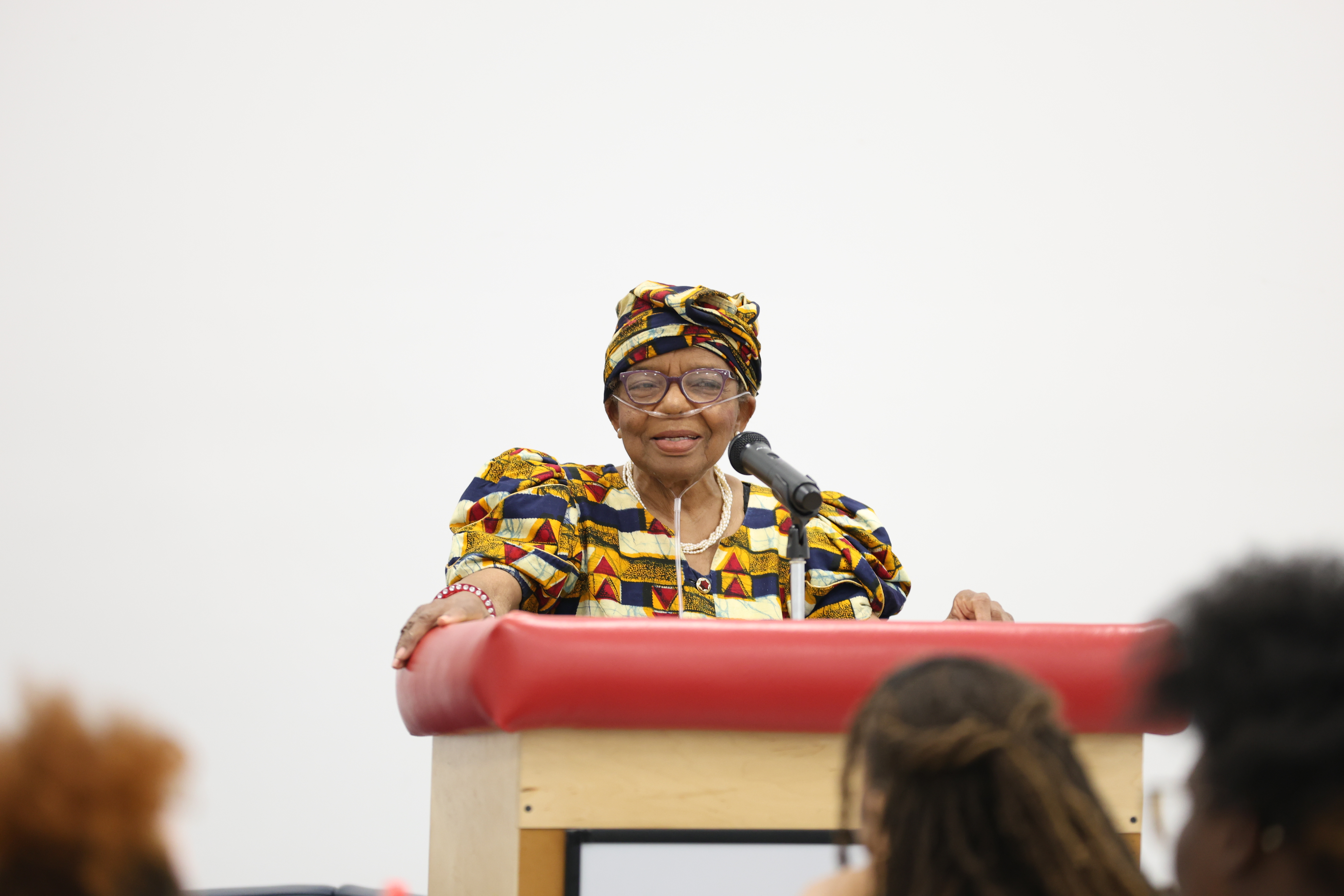
Bertha Rogers Looney, the last surviving member of
the Memphis State Eight, shares her story to students
during a Lunch and Learn session at the Whitehaven
Center as part of Black History Month.
Bertha Rogers Looney, the last surviving member of the Memphis State Eight, returned to familiar ground Monday as she shared her story of courage, uncertainty and quiet resolve with students, faculty and staff at Southwest Tennessee Community College’s Whitehaven Center. The event, hosted by Student Leadership and Engagement as part of Black History Month, offered a rare firsthand account of the 1959 integration of what is now the University of Memphis.
Looney, then a recent honor graduate of Hamilton High School, became one of eight African American students selected to desegregate Memphis State University. She told attendees that joining the group was not part of her plan. She had prepared to attend LeMoyne-Owen College after financial obstacles prevented her from accepting a scholarship to Fisk University. But persistent calls from NAACP leader Jesse Turner, who urged her to consider enrolling at Memphis State, ultimately changed the course of her life.
“I didn’t want to go. I was afraid,” Looney recalled. “But I was encouraged by my parents, my pastor and community leaders who believed this was something bigger than me.”
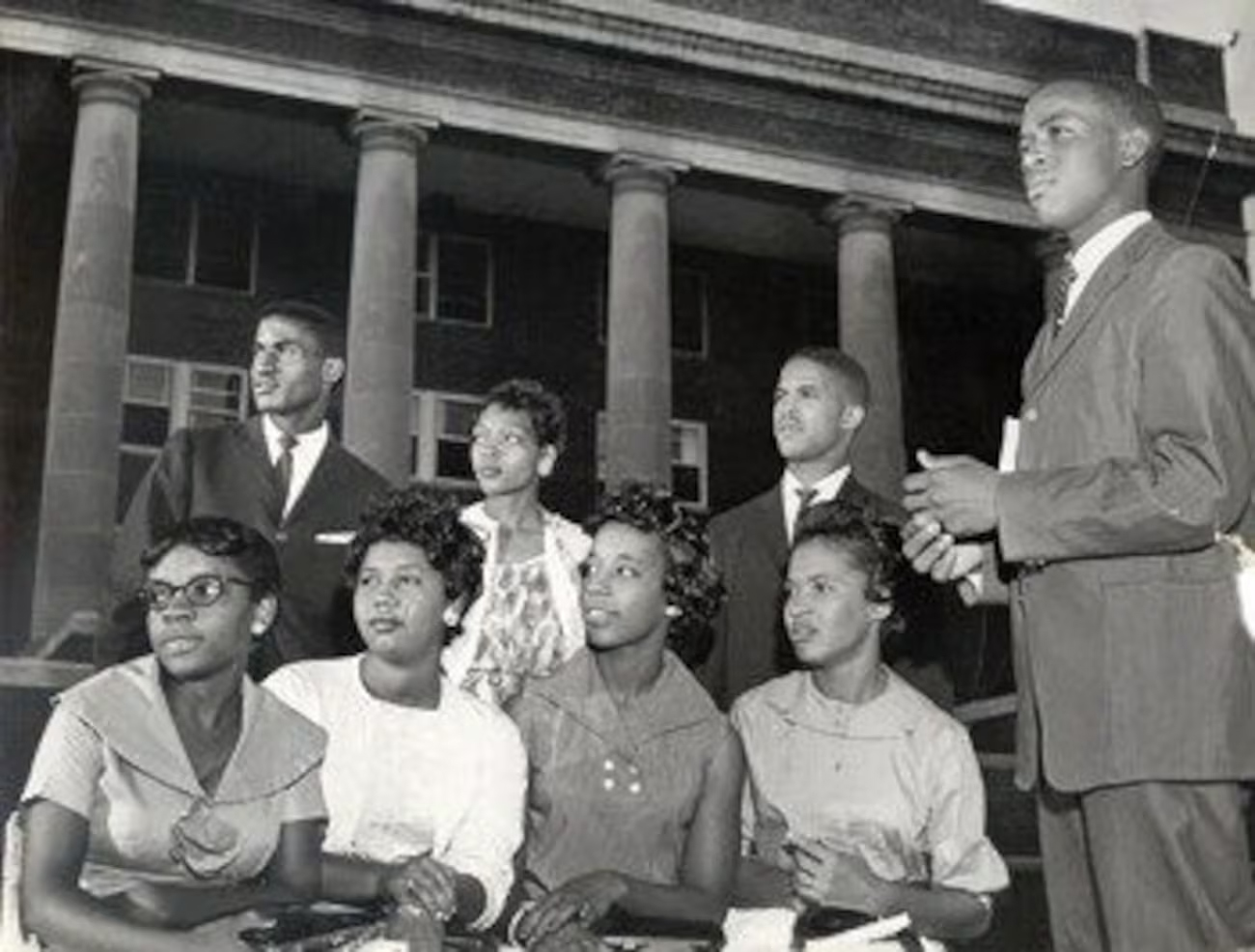
Left to right, in 1959: (front row) Bertha Rogers Looney,
Marvis LaVerne Kneeland Jones, Rose Blakney-Love,
Sammie Burnett-Johnson and Luther McClellan; (back row)
John Simpson, Eleanor Gandy and Ralph Prater. (Source:
University of Memphis)
On Sept. 18, 1959, Looney and her classmates stepped onto a campus of about 4,500 white students. She described those first days as daunting—marked by isolation, restrictive rules and the watchful escort of plainclothes officers who guided her between classes.
The eight were required to leave campus by noon, barred from entering the cafeteria and excluded from physical education courses to avoid what administrators called “potential unrest.”
“We didn’t exist in the classroom,” she said. “Our hands would go up with questions, and they wouldn’t be seen. Eventually, things got better, but it took time.”
Despite the challenges, Looney persisted. She completed both her bachelor’s and master’s degrees at Memphis State, later pursuing additional studies at Coppin State University, Catholic University and the University of Maryland. She went on to teach high school business education and retired as a professor of English at Southwest, closing a 45-year career in education.
Her message to students was grounded in perseverance and self-belief. She urged them to recognize the opportunities available to them, contrasting their freedoms with the barriers she and her peers faced in the early days of desegregation.
“Believe in yourself. Take the chance,” Looney said. “You never know what you can achieve until you step into it.”
Audience members thanked her for her sacrifices, with some noting how her journey made their own degrees possible. Looney smiled, acknowledging that the university she once feared walking across is now a place she proudly applauds. Reflecting on how far the institution—and the city—have come, she emphasized that progress did not happen overnight. It grew from the efforts of many, including those who later protested for broader inclusion and equal access.
“We dared to be first,” she said. “And because of that, others could come behind us.”
Looney’s memoir, We Dare to Be First, is set for release in March.